Whoa!
I remember the first time I held a hardware wallet; the weight felt reassuring, like cash in your palm.
At first I thought a single-device solution was overkill, but then I watched a friend lose access to a dozen tokens because of a tiny firmware mismatch.
Something felt off about the common advice that “all hardware wallets are equal” — my instinct said otherwise, and that gut was right more often than not.
Long story short: multi-currency support is not a checklist item, it’s a risk surface, and treating it like somethin’ small is a mistake that can cost real value when networks fork, standards shift, or when a wallet’s companion app lags behind.
Really?
Yes — and here’s where it gets messy: tokens aren’t just coins anymore.
You have ERC-20, BEP-20, Solana SPL, and a thousand experimental chains that devs love to spin up.
Managing keys and signatures across those ecosystems requires more than storage; it requires the wallet firmware, the host software, and your UX flow to all behave in sync, or you open the door to user error and edge-case failures.
On one hand the hardware isolates private keys well, though actually on the other hand poor app integration can cause users to sign a bad transaction because they didn’t see chain-specific details clearly—this is human+tech risk clashing.
Hmm…
Here’s what bugs me about many guides: they treat multi-currency support as a marketing badge instead of a security design problem.
Companies will tout “supports 1,800+ assets” and a lot of people nod and move on.
But supporting an asset on paper is different from supporting it securely end-to-end; the devil lives in the UX, error handling, and the update cadence for new token standards, and those are the parts people rarely audit.
Initially I thought broad support meant convenience, but then I realized wider support often increases the attack surface unless the product is deliberately engineered for composability and safe defaults.
Seriously?
Yes, seriously—because nuance matters.
Hardware wallets are excellent at isolating secrets, yet they are only as strong as the whole stack.
A hardware device may verify transaction hashes correctly, but if the host software constructs a transaction that mislabels destination chains or swaps assets silently, the hardware signature just rubber-stamps a mistake.
So the secure route is to favor systems where chain metadata is explicit, where the review screens on-device match what the host shows, and where recovery processes preserve cross-chain consistency without exposing seed phrases unnecessarily.
Whoa!
Trust models vary widely across vendors and open-source projects.
Some teams push rapid asset additions to satisfy users, while others gate new token support behind rigorous audits and formal verification steps.
That trade-off affects you directly: fast support might get your token listed today, but audited slow-roll support reduces parodies of complexity that lead to lost funds tomorrow.
I’m biased, but for most users—especially those holding large or many different assets—security-first rollouts make more sense than feature-first marketing.
Here’s the thing.
Multi-currency support also means managing recovery across chains.
A single seed should restore your assets across supported networks, but network-specific derivation paths and custom scripts introduce friction and occasionally require manual intervention.
The whole “one seed to rule them all” promise holds only if the recovery flow is documented, user-friendly, and tested against edge cases such as legacy derivations, alternative purpose fields, and vendor-specific prefixes.
If you use multiple wallets or migratory tooling, you must map derivation paths explicitly—verify, verify, verify—because assumptions will bite you.
Hmm…
On the practical side, hardware wallets combined with robust companion software give the best balance of security and convenience.
A lot of folks in the US (and especially busy tech-minded people) want a seamless experience that feels like banking apps, but banks don’t have to multi-sig consensus or sign exotic smart-contract interactions.
So expect trade-offs: convenience often nudges toward the app handling complexity, while security nudges toward transparent, on-device confirmations and simple canonical flows.
My recommendation is to pick a wallet whose companion app is actively maintained and whose team communicates update schedules and security advisories openly—don’t be shy, check the changelogs.
Really?
Yes—because even with a great device, poor key management habits undo everything.
Cold storage isn’t a “set it and forget it” activity; you need a plan for backups, firmware updates, and safe testing of small transactions when exploring new chains.
Keep a small test amount on unfamiliar networks until you’re comfortable, and avoid moving entire positions in a single transaction when the stack is newly integrated or recently updated.
That conservative approach costs you time but saves capital; it’s an insurance premium people rarely want to pay until they need it.
Choosing tools that actually work together (and the one companion app I often recommend)
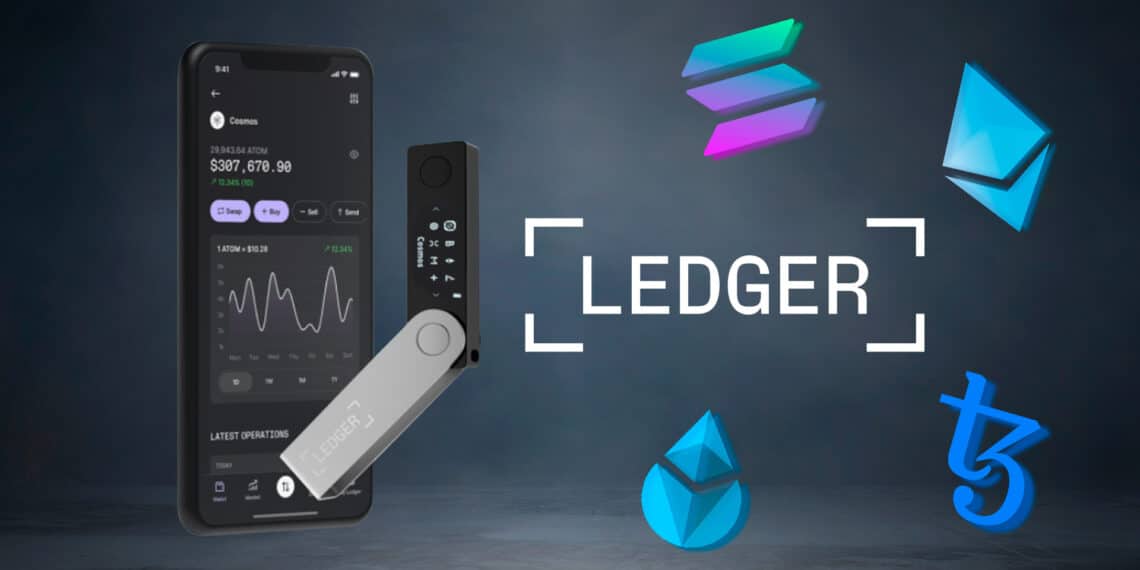
My preference is hardware that enforces on-device review and composes well with audited desktop or mobile software, and I often steer readers toward a workflow that pairs a secure device with an actively developed host like ledger live because it prioritizes explicit transaction details and ongoing asset support.
(Oh, and by the way… check update notes before interacting with new token types.)
A rule of thumb: the fewer separate signers and the clearer the on-device messages, the better your long-term resilience will be.
I’m not saying one ecosystem is perfect—nothing is—but align your threat model with the product’s security architecture and the team’s transparency about how they add new assets.
Whoa!
Operational hygiene matters more than headline features.
Use passphrases only if you understand them, store recovery seeds offline, and avoid entering them into any online device.
Also, think through inheritance and contingency: who can access your funds if something happens to you, and how will they do it without risking a phishing-style social engineering attack?
Plan processes, not just tools—write clear steps, test them with small transfers, and review them periodically because life and tech both change.
Hmm…
For advanced users, multi-sig setups across different wallets and vendors increase security but raise complexity.
On one hand you reduce single points of failure, though on the other hand you increase the chance of misconfiguration, out-of-sync firmware, or incompatible signing protocols—so test thoroughly.
If you choose multi-sig, practice recoveries and document key storage locations; assume one signer will eventually be offline, lost, or unwilling to participate.
It sounds daunting, but with good policies multi-sig is a powerful hedge against both technical and human risk.
FAQ — quick answers for common concerns
Q: Can one hardware wallet really handle all my crypto securely?
A: Short answer: often yes, but it depends.
Medium answer: compatibility with your chosen assets, on-device confirmation detail, and companion app maintenance are the real criteria.
Longer answer: if the device and its host software both validate chain-specific metadata and show identical transaction summaries, one hardware wallet can be both convenient and secure; if either component shortcuts details (or lagging support forces manual operations), you may need additional tools or workflows to remain safe.
Q: How should I test support for a new token?
A: Start tiny.
Send a token amount you can afford to lose to verify the path, check on-device prompts, confirm that gas and chain IDs match, and only escalate once you’re confident in the flow.
Document the steps and add them to your personal playbook so you don’t repeat risky guessing later.
Leave a Reply