Author: adminbackup

  • Running a Bitcoin Full Node: What the Network Really Needs (and What You’ll Actually Do)

    Okay, so check this out—I’ve run nodes that served my small projects and nodes that hummed quietly on spare hardware for months. Whoa! Running a full node is not mystical. It’s practical, and it’s political, too. My instinct said: start local, then scale. Initially I thought it was mainly hardware and disk space, but then I realized the human factors—attention, updates, and community etiquette—matter just as much.

    Seriously? Yep. If you care about sovereignty, privacy, and keeping Bitcoin decentralized, you should be a node operator. Short punch: a node validates rules, relays blocks and transactions, and resists censorship. Longer thought: that role sits at the intersection of cryptography, networking, and civic tech, and it changes how you relate to money and trust over time—slowly, sometimes painfully.

    Here’s what bugs me about casual guides: they obsess over SSD models while glossing over peer management and backup strategies. Hmm… somethin’ felt off about that. So this piece focuses on practical operator habits, not just specs—because being a node operator is behavioral as much as technological.

    First, a quick reality check. Running a full node is not mining. It’s not a get-rich-quick scheme. It’s not even necessary for normal Bitcoin use, if you trust other services. But if you want to verify rules yourself and help the network—this is the thing you run. Really.

    Rack-mounted server and a home router with blinking LEDs, showing a typical small-node setup

    Why run a full node? The operator’s view

    On one hand, running a node gives you ultimate verification of the blockchain; on the other hand, it requires ongoing maintenance and decisions. Initially I thought the decision was purely technical, but actually it’s also ethical and social. You decide what software versions to trust. You decide which rules to accept. You decide whether to help relay for your peers. These choices matter.

    Running a node means you validate blocks and transactions against consensus rules. That’s simple in concept. The implementation is layered and nuanced. For instance, compact block relay reduces bandwidth but needs compatible peers. Managing peers, ban lists, and connection limits becomes part of daily life—I’m biased, but node ops should learn at least a little about BIP protocols and p2p troubleshooting.

    Really? Yes. You will tweak conf files. You’ll set prune limits sometimes. And you’ll decide whether to run the wallet or keep your node as a “validator-only” instance. On my first run I kept everything default. Later, after watching a misbehaving peer spam my log, I hardened settings. Lesson learned: defaults are a starting point, not gospel.

    A practical list: keep your node updated, monitor disk and CPU, watch for large IBDs (initial block downloads), and have a recovery plan. Also—important—watch your public exposure. Opening ports is fine, but you should understand your firewall. On the privacy front, running a wallet on the same machine increases linkage risk; segregate if you care about OPSEC. Somethin’ as small as an exposed RPC port can leak more than you expect…

    Now let’s talk hardware because people love benchmarks. Short version: fast disk, reliable network, enough RAM. Medium version: prefer NVMe or a modern SSD for the chainstate and blocks, because random I/O hurts. Longer thought: if you’re running other services (lighting nodes, explorers, watchers), dedicate separate disks or VMs to avoid interference—concurrency matters, and subtle contention can slow validation in surprising ways.

    On the software side, pick Bitcoin Core unless you have very specific needs. Why? It’s the reference implementation with the largest review base, the most robust test coverage, and broad community trust. I’m not saying it’s perfect. Actually, wait—let me rephrase that—it’s the most conservative, well-audited option for most operators. For enthusiasts wanting to dive deeper, there are alternative clients, but for network health, diversity plus reviewed code wins.

    Listening to the network is more than opening port 8333. You should run with –listen and set a sensible maxconnections. If bandwidth is a constraint, enable pruning (but remember: pruned nodes cannot serve historical data to peers). Also consider setting up an onion address to be reachable via Tor. Onions give privacy and reduce your node’s fingerprinting exposure. On the other hand, Tor adds complexity with configuration and uptime tradeoffs—there’s always a cost-benefit balance.

    Peer selection is subtle. On one hand you want geographically diverse peers to avoid regional partitions. On the other hand you want reliable, well-behaved peers. I used to accept default peers for weeks. Then a series of misbehaving peers ate my retransmission budget and delayed compact block propagation. Today I maintain a small list of trusted peers and seed addresses—it’s like keeping good friends around on Main Street, not random strangers at a gas station.

    Backup strategies are deceptively simple: back up your wallet, not the blockchain. The chain can be re-downloaded. Wallet seeds and descriptors cannot. Still, consider a plan to snapshot critical configurations and prune points, especially for setups that accelerate IBDs (like using rsync snapshots to seed new hardware). I’ll be honest: I’ve burned time re-syncing because I assumed re-downloading would be quick—and I was wrong. Very very wrong.

    Security habits. Short reminder: RPC access should be firewalled. Use cookie authentication or set rpcuser/rpcpassword with strong entropy. Consider running your node on a separate LAN or VLAN. Medium note: hardware wallets and watch-only wallets reduce exposure. Longer thought: full nodes are attractive targets only to low-skill attackers who probe for misconfigurations, but that doesn’t mean you should be sloppy—practice least privilege and monitor logs.

    Operational automation helps. Use systemd or containers to manage restarts. Schedule log rotations and alerts for high CPU or disk full events. Set up simple Prometheus + Grafana dashboards if you like metrics. (Oh, and by the way… metrics teach you patterns—unexpected spikes often precede software bugs or DDoS attempts.)

    Network contribution matters too. If you can, be a relay for other nodes. Short burst: Help the network. Medium: Increase your outbound connections. Long thought: relaying is how decentralization actually scales—every extra healthy, well-behaved node reduces reliance on centralized services and improves privacy for everyone.

    Legal and ISP considerations: check your local laws and your ISP’s terms. Some residential ISPs have usage caps, and running a node can generate non-trivial upload traffic during IBDs or reorgs. On the flip side, many ISPs don’t care; the worst case is a policy violation notice that can be mitigated by contacting support. In the US, consumer protections and ISP culture vary state to state—so be aware.

    Practical checklist and resources

    Hardware: SSD (preferably NVMe), 8–16GB RAM, reliable PSU. Network: stable uplink, open port or Tor. Software: run the latest stable Bitcoin Core, monitor with basic tools, consider electrum or CLI wallet separation. For detailed downloads and documentation, check the reference client here: bitcoin. This is where you’ll find official release notes and setup guidance—use it.

    Operational checklist (short bullets in prose): ensure backups of seeds, use non-default RPC credentials, consider run time in a UPS to avoid abrupt shutdowns during large writes, monitor disk health, and document your node’s peer list and configuration for future troubleshooting. Somethin’ as mundane as a labeled USB with your seed (air-gapped) will save you weeks.

    Community practices: participate in your local or online node-ops groups. Share experiences about bandwidth patterns, useful config flags, and Tor quirks. Initially I thought forums were noise, but after a couple of coordinated testnets I appreciated the insights you only get from collective experience—there’s an “aha!” in shared failure modes.

    FAQ: Quick answers from an operator

    Do I need a powerful machine?

    No. You need reliability more than raw power. CPU matters for verification during IBDs, disk performance matters constantly, and network stability matters always.

    How much bandwidth will it use?

    Depends. Initial block download uses the most. After syncing, steady-state relay is modest but can spike. If you’re bandwidth-capped, enable pruning or use Tor to limit exposure.

    Can I run multiple services on the same node?

    Yes, but be cautious. Segregate wallets and high-I/O services when possible. Contention is real and subtle.

    Okay, one last thing—this is where a lot of guides go soft: running a node changes your relationship to risk and trust. It’s not just a tool; it’s a practice. You’ll find yourself noticing propagation delays, block timing oddities, and community governance nudges. You’ll be right sometimes and wrong sometimes. On balance, running a full node makes you a better-informed user and a better neighbor to the network. Hmm… it still surprises me how small operational choices ripple across time.

    So, if you’re ready: pick hardware, read release notes, back up seeds, and join the node-op community. Seriously? Yes. Go set it up. Then check logs after 24 hours. Then tweak. Then help someone else. This network needs that kind of slow, steady, human attention.
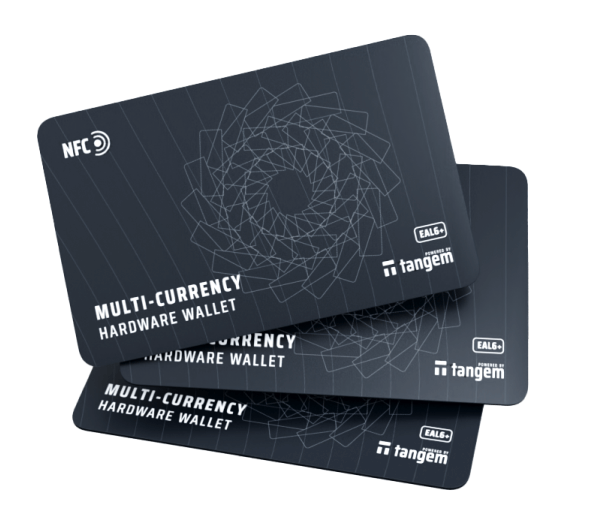

  • Why a Smart Card Could Be the Best Cold Storage You’ve Never Trusted

    Whoa! This hits differently than the usual hardware-wallet spiel. My instinct said: keep it simple, small, and offline. Seriously? Yep. At first I thought cold storage meant a metal vault and a memorized seed phrase tucked into a safety deposit box. But then I dug in deeper—actually, wait—let me rephrase that: I started testing small, card-shaped devices that behave like miniature vaults and my assumptions started to wobble.

    Here’s the thing. Seed phrases are fragile. They work, but they also ruin vacations, marriages, and occasionally sleep. Somethin’ about a string of words on a napkin just feels wrong. On one hand the crypto industry idolizes mnemonic backups; on the other hand most people treat them like sticky notes. My gut kept telling me there had to be a better middle-ground between “paper-and-pray” and lugging a cold-storage ledger across the country.

    So I tried a smart-card approach. It looks unassuming. It feels like a credit card. But inside it holds private keys in a chip you don’t export. Hmm… that surprised me. Initially I thought the convenience would come at a cost to security, though actually the math and secure element design told a different story.

    Close-up of a smart-card hardware wallet held between fingers, showing chip and minimalist design

    Why a smart card changes the mental model

    Short story: it reduces attack surface. Long story: most attacks target endpoints where keys can be copied—phones, laptops, paper, brain. A card designed as a Secure Element eliminates that copying step, because the private key never leaves the chip. My first impression was skepticism; then I read the whitepaper and tried the workflow. The friction went down, and the chance of accidental key leakage went down too.

    Okay, check this out—real world: imagine traveling through airport security. You take out a credit card, not a chunky hardware device that screams “valuable” at scanners. You tap, you sign, you go. Practical? Very. Emotional reassurance? Also yes. I’m biased, but having a form factor that reads like plastic instead of like an “expensive gadget” changes how people treat their backups.

    There are trade-offs. Smart cards rely heavily on the implementation of the secure element, the PIN fallback, recovery options, and supply-chain integrity. On one hand many designs are simple and excellent. On the other hand if supply-chain compromise occurs, you’re hosed. So you can’t be lazy about vendor review. But still—this approach sidesteps the worst UX trap: the human tendency to mishandle long mnemonics.

    Check this out—one card I tested integrates NFC for phone interaction and a tamper-resistant chip that signs transactions without exposing the private key. Wow! It felt modern and safe. Initially I wondered: “How can a tiny card be trusted more than a ledger with a long track record?” Then I compared attack vectors side-by-side and the card held up surprisingly well.

    How the user flow changes (and why it matters)

    Here’s a practical walkthrough from a user perspective. Tap card to phone. Enter PIN. Approve transaction. Done. No typing of a 24-word seed into a mobile app. No clipboard risks. No screenshot anxiety. That simplicity invites better security behavior—people will actually use it, rather than sideline it.

    But, there’s nuance. If you lose the card and you didn’t set up a robust recovery, you could be locked out. That’s obvious. So you still need a recovery plan—preferably one that avoids writing the full seed on an index card stuck under a plant (don’t do that). Multiple cards, multi-sig policies, or secure custodial fallback are valid strategies depending on the value you’re protecting.

    Frankly, what bugs me about many wallet designs is the “one-size-fits-all” messaging. Not every user needs the same protection level. Someone who holds a few hundred in altcoins probably shouldn’t endure military-grade paranoia. Conversely, institutions need auditable, recoverable policies. The smart-card approach scales across that spectrum if implemented with options.

    Security trade-offs and hard truths

    Think of security as risk management, not a checklist. The card reduces some risks and shifts others. For instance, physical theft becomes more meaningful if your PIN is weak. Supply-chain attacks become more meaningful if the firmware isn’t signed. Network attacks remain irrelevant because signing occurs offline. It’s a rebalancing.

    Initially I thought a card eliminates every problem. Then reality set in: no single solution is perfect. On one hand a card dramatically reduces key-exposure risk. On the other hand it introduces dependency on vendor integrity and on your recovery procedures. There’s no silver bullet, though this is one of the better bullets I’ve seen.

    I spent weeks testing transaction signing, resilience to NFC skimming attempts, and the recovery flows. Some things were great. Some things were annoyingly unpolished—user manuals written like they were for engineers, not normal humans. That’s a recurring theme in crypto: brilliant tech, terrible docs. Fix the docs, and adoption jumps.

    When a smart card is the right tool

    If you want a minimally invasive cold storage that behaves like a normal card, this is it. Small holders, globetrotters, and privacy-minded folks will like the form factor. For higher net worth or institutional setups, use the card as one leg in a multi-sig or distributed backup strategy. Don’t mix metaphors—use the card where it fits, not as a universal cure.

    I’ll be honest: a lot of people will choose convenience, and that’s okay. The point is to make the secure choice the easy choice. When the secure option looks and feels like what you already carry in your wallet, adoption becomes realistic.

    Practical tips before you buy

    Check provenance. Verify firmware signatures. Read community audits. Ask about the secure element vendor and the PIN retry policy. Consider buying from trusted retailers rather than gray market sellers. And if you’re sharing this with family—teach them how to use it, don’t just hand them a plastic card and expect magic.

    Oh, and by the way… if you’re exploring specific cards, look into tangem wallet for a real-world example of a smart-card approach to cold storage that balances usability and security elegantly. The pairing workflow and the “no export” design are exactly what I’ve been praising—simple, discreet, and robust. I don’t use hyperlinks lightly, and this one deserves a look.

    FAQ

    Can a smart card replace a 24-word seed?

    Depends. It can replace active use of the mnemonic for signing, but you still need a recovery strategy. Smart cards often store keys in a way that prevents exporting, so the mnemonic may be generated and stored only within the card. For long-term guarantees, consider secondary backups or multi-sig arrangements.

    What if the card gets damaged?

    Design for redundancy. Either provision multiple cards as backups (stored separately), or establish a recovery policy with another trusted device. Some people treat cards like passports—backup copies, separate locations, and documented emergency steps.

    Are smart cards safe against remote attacks?

    Yes, since signing happens offline in the secure element, remote network-based attacks are largely ineffective. The risk profile shifts to physical theft, PIN bruteforce (mitigated by retry limits), and supply-chain issues—so those deserve attention.

  • Why Real-Time DEX Analytics Are a Game-Changer for Crypto Traders

    Ever had that feeling where the market shifts just a split second before you can act? Yeah, me too. It’s frustrating. You’re watching a token, waiting for the right moment, and boom—the opportunity slips through your fingers. Seriously, timing is everything in DeFi trading. And here’s the thing: without sharp, real-time insights, you’re basically flying blind.

    So I’ve been diving into how decentralized exchange (DEX) analytics tools are reshaping the landscape. At first, I thought all these dashboards were just flashy bells and whistles. But then I stumbled on some platforms that actually deliver on the promise—letting you track tokens live, spot emerging trends, and even set price alerts. That was an aha moment for me.

    But hang on, not all of them are created equal. Some lag behind, others drown you in data that doesn’t really help. What’s really catching my eye lately is the integration of portfolio tracking with live DEX data, which feels like the holy grail for traders who juggle multiple assets. It’s like having a sixth sense for the market.

    Okay, let’s take a step back. Why does real-time DEX data matter so much anyway? Well, unlike centralized exchanges, DEXs operate without middlemen, meaning prices and liquidity can swing wildly in moments. If you’re not tuned in constantly, you can miss price spikes or slip into bad trades. My gut says that ignoring these tools is a bit like bringing a butter knife to a gunfight.

    Whoa! Did you know some tokens can pump or dump within minutes on DEXs before the news even hits mainstream channels? That’s wild. And it’s exactly why having on-demand analytics is no longer a luxury—it’s essential.

    The Rise of Portfolio Tracking in the DeFi Era

    Now, portfolio tracking—this is where things get really interesting. I mean, sure, you can check your balances on wallets or apps, but what about seeing in real-time how your assets are performing across multiple DEXs? That’s a different beast. Plus, with so many new tokens popping up daily, it’s easy to lose track or miss subtle market shifts.

    Initially, I thought manual tracking was enough. But then I realized how time-consuming and error-prone that approach is, especially when you want to stay agile. So I started using tools that sync directly with my wallet and pull live data from various DEXs. Game-changer, honestly.

    On one hand, it feels a little invasive to link your wallet to third-party apps, though actually, the best ones use read-only connections and strong encryption. Still, always something to be cautious about. But the time saved and the insights gained? Totally worth it.

    Here’s a quick tip: when you’re hunting for a reliable platform, look for one that bundles portfolio tracking with price alerts. That way, you don’t have to babysit your screen all day. Instead, you get notified exactly when a token hits your target price or when liquidity takes a dive.

    By the way, speaking of price alerts, those are pure gold. Seriously. I set alerts for some volatile tokens, and it’s saved me from some nasty price dips and helped me lock in profits before sudden pumps cooled off.

    Screenshot of a DEX analytics dashboard showing live token prices and portfolio overview

    Why I Recommend Checking out dexscreener official

    Okay, so check this out—there’s this platform called dexscreener official that I’ve been using, and it nails everything I just talked about. It combines live token tracking, multi-chain portfolio views, and customizable price alerts all in one spot.

    What bugs me about other tools is how clunky or slow they can be, especially during market surges. But dexscreener official has this smooth interface that updates in real-time, no lag. Plus, it supports tons of chains and DEXs, which means you’re not missing out on niche tokens that only show up on smaller platforms.

    One thing I particularly like is how transparent and community-driven their approach feels. They’re constantly updating features based on trader feedback, which is refreshing compared to some big-name apps that seem stuck in their ways.

    Also, the price alert system is very flexible—you can set alerts based on price, volume spikes, or even liquidity changes. That’s crucial because sometimes volume surges precede big moves, and catching those early can be the difference between a solid trade and a missed opportunity.

    My only gripe? Sometimes the UI feels a bit overwhelming if you’re new to DeFi, but honestly, once you spend a few minutes poking around, it clicks. And that’s the trade-off for having so much data at your fingertips.

    How Real-Time Alerts Can Save Your Portfolio

    I’ll be honest, I brushed off alerts for a long time. I thought, “I can just watch the charts.” But the crypto market? It doesn’t wait. You blink, and prices jump or tank hard. There was this one time I ignored an alert, thinking the dip was just noise. Nope. I lost some decent gains because I wasn’t paying attention.

    Alerts aren’t just about catching pumps; they’re also about risk management. If your token’s liquidity dries up suddenly, that’s a red flag. You want to know immediately so you can decide whether to exit or hold. Tools that integrate these alerts with live DEX data help you act fast before the market punishes hesitation.

    Funny enough, these systems also help with emotional discipline. When you know you’ll get notified if a trade hits your target, you’re less likely to make impulsive decisions. It’s like having a coach in your pocket.

    Something felt off about relying purely on chart patterns. Price alerts combined with deep analytics provide a fuller picture. The market’s messy, and the more layers of info you have, the better your odds.

    Wrapping It Up (But Not Really)

    So yeah, real-time DEX analytics, coupled with portfolio tracking and smart price alerts, have changed how I trade. It’s not perfect—there’s a learning curve, and the market’s still wild as ever—but these tools give you an edge that’s hard to beat.

    I’m biased, but if you’re serious about DeFi trading, you owe it to yourself to explore platforms like dexscreener official. They bring transparency and speed to a space that desperately needs it.

    Anyway, that’s my two cents. The crypto game keeps evolving, and staying ahead means embracing these tools—even if they feel a little overwhelming at first. Because trust me, missing out on real-time info? That hurts way more than learning a new dashboard.