Author: adminbackup

  • Phantom NFT Security: What the Browser Extension Actually Protects—and What It Cannot

    The most dangerous NFT in a wallet is not always the one that looks valuable. Often, the greater risk is the harmless-looking item that persuades its owner to click, sign, or reveal information. That is the counterintuitive lesson behind using Phantom for Solana NFTs: the wallet can improve visibility and add useful transaction warnings, but it cannot replace the user’s judgment. In a non-custodial system, security is shared between software, the blockchain, the browser, and the person approving each action.

    Consider a common US user scenario. A Solana collector opens Phantom and sees an unfamiliar NFT in the gallery. It may contain an enticing message or appear to offer a reward. The collector follows the instruction to a marketplace-like website, connects the Phantom browser extension, and approves a transaction without examining its consequences. Nothing about the image itself proves that funds will be stolen. The decisive event is the signature: the wallet authorizes a blockchain instruction, and the resulting transfer may be difficult or impossible to reverse.

    Phantom browser extension interface illustrating wallet-based NFT review and transaction verification

    Why Phantom NFT management is useful—but not a complete security system

    Phantom’s NFT gallery addresses a practical problem that is easy to underestimate. Digital collectibles are not merely rows of token balances; users need to inspect images, metadata, and collection context before deciding what to keep, list, transfer, or discard. The wallet provides a high-resolution gallery, supports marketplace listing from the wallet interface, and allows users to burn malicious or unwanted spam NFTs. This reduces the need to move between multiple tools, which can lower confusion and make routine management more legible.

    However, visibility is not the same as authenticity. An NFT can display attractive artwork while pointing to misleading metadata or being distributed as spam. Burning an unwanted NFT removes it from the wallet, but the act of viewing it does not make its associated website trustworthy. Likewise, a familiar collection name or recognizable image is not proof that a transaction request is safe. The relevant question is not “Does this NFT look real?” but “What exact authority is this request asking me to grant?”

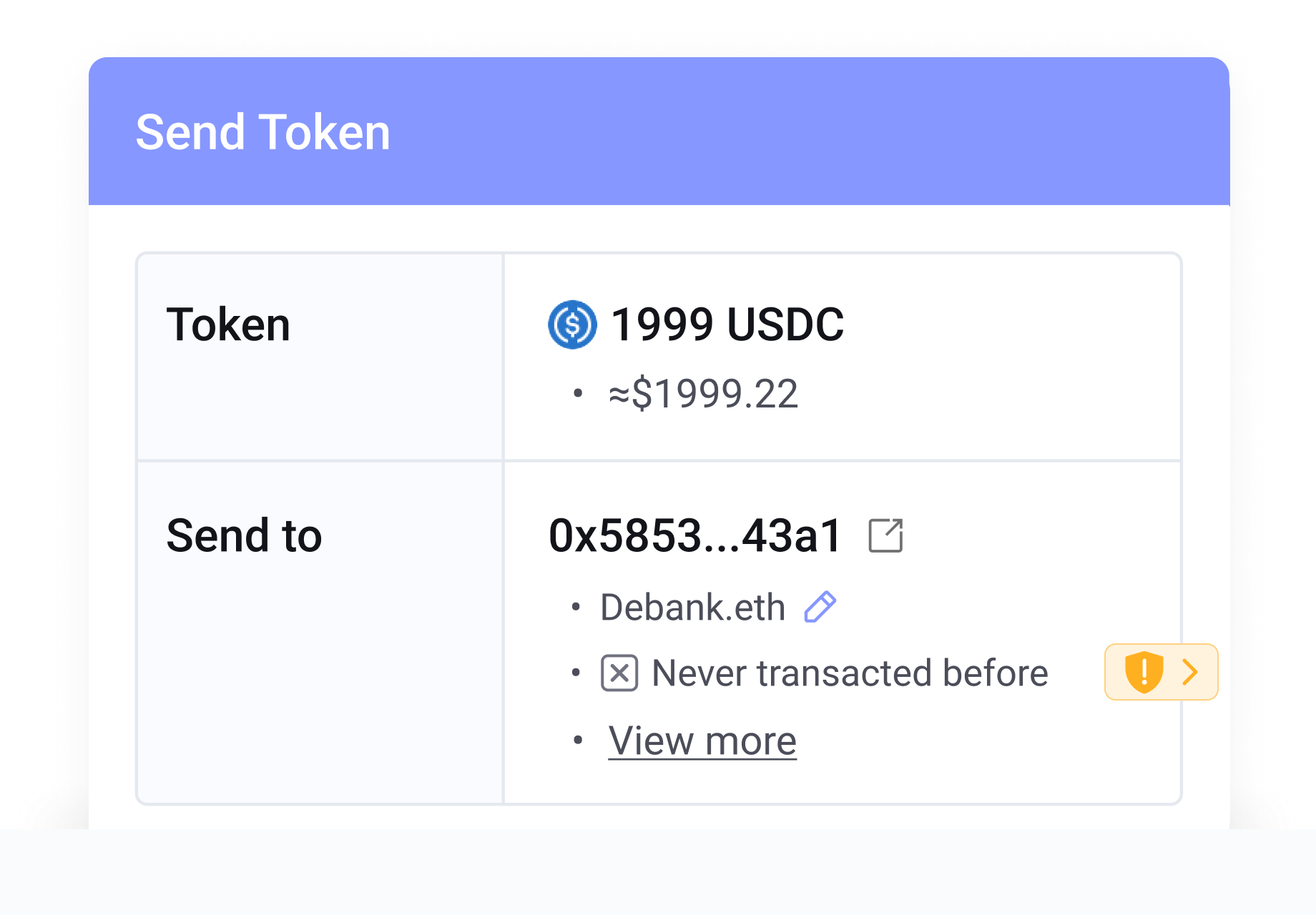
    This distinction matters because wallets operate at the boundary between human-readable interfaces and machine-executed instructions. A user sees a button such as “claim,” “list,” or “verify.” The blockchain processes account changes, token transfers, delegated permissions, or other program instructions. Transaction simulation helps bridge that gap by showing assets expected to enter or leave the wallet before approval. It functions like a visual firewall: valuable because it exposes consequences that a website’s wording may conceal, but limited because simulations depend on what can be interpreted and displayed accurately.

    A simulation should therefore be treated as a verification aid, not an insurance policy. If the destination application is deceptive, if the user is being rushed, or if the transaction is unfamiliar, a warning deserves attention rather than dismissal. The safest response to an unexpected NFT is often to avoid interacting with it altogether, verify the collection through an independently trusted route, and use a separate wallet for experimental applications.

    The browser extension download is part of the threat model

    For Solana users, a Phantom browser extension can make decentralized applications convenient: the extension connects websites to wallet accounts and presents signing requests inside the browser. Phantom is available for Chrome, Firefox, Brave, and Edge, with mobile applications for iOS and Android. The recent project update dated August 11, 2026, also presents the wallet as supporting Solana, Ethereum, Bitcoin, Base, and Sui across desktop and mobile platforms. That wider availability is useful, but it creates a security obligation before the wallet is ever opened.

    The first decision is obtaining the software from a trustworthy source. Search results, advertisements, social posts, and unsolicited messages can lead to fake extensions designed to capture recovery phrases or redirect transactions. A safer installation process begins with the official distribution path, careful inspection of the publisher and permissions, and attention to the browser’s extension details. Readers researching a legitimate phantom wallet download should treat the download step as a security checkpoint, not as a minor setup task.

    There is a deeper reason this matters. A counterfeit extension does not need to defeat Solana’s consensus rules. It only needs to persuade a person to enter the 12-word secret recovery phrase or approve a transaction. Once a recovery phrase is exposed, an attacker may recreate the wallet elsewhere. No customer-service intervention can reliably reverse that exposure. A genuine extension also cannot protect a phrase that its owner voluntarily types into a fraudulent form.

    Phantom’s non-custodial architecture means users retain control of their private keys and recovery phrases rather than placing funds under a third party’s direct custody. This prevents a platform operator from simply freezing or accessing the wallet in the way a centralized exchange might. The trade-off is fundamental: control and responsibility arrive together. If the recovery phrase is lost, funds may be permanently inaccessible; if it is copied, the wallet may be compromised even when the browser extension itself is genuine.

    A practical risk model for Solana NFT users

    A useful way to evaluate a wallet action is to separate four questions. First, is the software authentic? Second, is the website or decentralized application the intended destination? Third, does the transaction simulation match the user’s stated goal? Fourth, is the account being used appropriate for the amount at risk? This framework is more reliable than judging a transaction by its visual polish or by the reputation of a single brand.

    For example, a collector might use one wallet for long-term NFTs and SOL, a second wallet for ordinary marketplace activity, and a third low-value wallet for unfamiliar applications. This does not eliminate risk, since users can still approve harmful transactions or mishandle credentials. It does limit the damage of a single mistake. The separation is especially useful when testing new applications, claiming promotional assets, or exploring projects whose contracts and operating history are not well understood.

    Hardware integration adds another layer. Phantom supports Ledger hardware wallets, allowing users to interact with Web3 applications while keeping private keys offline in cold storage. That arrangement can reduce the consequences of malware attempting to extract keys, but it does not make every signature safe. A hardware wallet can still sign a transaction that the owner approves. Cold storage protects the key; it does not independently determine whether the requested action is economically sensible.

    Privacy is another area where precise expectations matter. Phantom prioritizes self-custodial privacy by not logging personal user data such as IP addresses, names, or email addresses. That is different from complete on-chain anonymity. Blockchain transactions remain publicly observable, and applications, validators, analytics services, or counterparties may infer relationships from addresses and transaction patterns. Users should distinguish between reduced collection of personal account data and the broader visibility inherent in public ledgers.

    Convenience, multi-chain access, and the risk of misplaced confidence

    Phantom began as a Solana-focused wallet and now supports a broader environment including Ethereum, Bitcoin, Polygon, Base, Sui, and Monad. Automatic chain detection can make dApp use easier because the wallet identifies the network a compatible application requires rather than forcing manual switching. Built-in swapping similarly reduces friction by allowing trades across supported chains within the application, with routing intended to optimize for lower slippage.

    Convenience has a predictable side effect: it can compress several decisions into one familiar interface. A user who understands SOL may not automatically understand the different transaction conventions, fee structures, token standards, or application risks associated with another network. Automatic detection reduces configuration errors, but it may also encourage users to approve actions without noticing which chain or asset is involved. The more unified the interface becomes, the more important it is to read the transaction context rather than rely on visual familiarity.

    This is also why comparisons with alternatives should be task-specific. MetaMask is commonly associated with EVM-focused users, Trust Wallet with a mobile-first and broad multi-chain experience, and Solflare with dedicated Solana use. The best choice depends on the user’s network exposure, hardware setup, mobile habits, and tolerance for managing complexity. A wallet with more features is not automatically safer; additional functionality can expand the number of actions a user must understand.

    What to watch next

    The most meaningful future signal is not simply whether Phantom adds another supported chain or feature. It is whether wallet interfaces become better at translating program instructions into consequences ordinary users can verify. More informative simulations, clearer warnings, stronger domain verification, and better separation between collectible display and executable links could reduce error. These improvements would matter most if they help users pause before signing rather than merely add more visual alerts.

    For now, the practical implication is conditional and straightforward. If Phantom’s simulation matches a known purpose, the software came from a verified source, the recovery phrase is protected offline, and the transaction occurs from an appropriately segregated wallet, the user’s risk is better managed. If any of those conditions fail—especially the recovery-phrase or software-authenticity checks—the apparent convenience of a Phantom NFT workflow should not be mistaken for safety.

    Frequently asked questions

    Can a Phantom NFT steal funds just by appearing in my wallet?

    Receiving or viewing an unfamiliar NFT does not by itself prove that funds have been taken. The danger usually arises when the owner follows an embedded instruction, visits a deceptive site, connects the wallet, or signs a transaction. Avoid interacting with unsolicited NFTs, verify collection information independently, and review every transaction request carefully.

    What is the most important rule when installing the Phantom browser extension?

    Use a trusted official distribution path and verify the publisher before installation. Never enter a 12-word recovery phrase into a website, form, message, or support conversation. A legitimate wallet provider will not need users to disclose that phrase in order to restore or secure an account.

    Does transaction simulation guarantee that an NFT transaction is safe?

    No. Simulation can clarify expected asset movements and expose suspicious outcomes, but it is a decision aid rather than a guarantee. Users should still verify the application, understand the requested action, check the network and recipient, and reject transactions that are unexpected or difficult to explain.

    Phantom is best understood not as a protective vault that removes human risk, but as an instrument for making blockchain actions more visible and manageable. Its NFT gallery, simulation features, hardware-wallet support, and self-custodial design can strengthen a disciplined workflow. They cannot compensate for a fake extension, an exposed recovery phrase, or an unexplained signature. For Solana users, that is the central security lesson: the safest wallet decision is often the one made before the approval screen appears.

  • Phantom NFT Security: What the Browser Extension Actually Protects—and What It Cannot

    The most dangerous NFT in a wallet is not always the one that looks valuable. Often, the greater risk is the harmless-looking item that persuades its owner to click, sign, or reveal information. That is the counterintuitive lesson behind using Phantom for Solana NFTs: the wallet can improve visibility and add useful transaction warnings, but it cannot replace the user’s judgment. In a non-custodial system, security is shared between software, the blockchain, the browser, and the person approving each action.

    Consider a common US user scenario. A Solana collector opens Phantom and sees an unfamiliar NFT in the gallery. It may contain an enticing message or appear to offer a reward. The collector follows the instruction to a marketplace-like website, connects the Phantom browser extension, and approves a transaction without examining its consequences. Nothing about the image itself proves that funds will be stolen. The decisive event is the signature: the wallet authorizes a blockchain instruction, and the resulting transfer may be difficult or impossible to reverse.

    Phantom browser extension interface illustrating wallet-based NFT review and transaction verification

    Why Phantom NFT management is useful—but not a complete security system

    Phantom’s NFT gallery addresses a practical problem that is easy to underestimate. Digital collectibles are not merely rows of token balances; users need to inspect images, metadata, and collection context before deciding what to keep, list, transfer, or discard. The wallet provides a high-resolution gallery, supports marketplace listing from the wallet interface, and allows users to burn malicious or unwanted spam NFTs. This reduces the need to move between multiple tools, which can lower confusion and make routine management more legible.

    However, visibility is not the same as authenticity. An NFT can display attractive artwork while pointing to misleading metadata or being distributed as spam. Burning an unwanted NFT removes it from the wallet, but the act of viewing it does not make its associated website trustworthy. Likewise, a familiar collection name or recognizable image is not proof that a transaction request is safe. The relevant question is not “Does this NFT look real?” but “What exact authority is this request asking me to grant?”

    This distinction matters because wallets operate at the boundary between human-readable interfaces and machine-executed instructions. A user sees a button such as “claim,” “list,” or “verify.” The blockchain processes account changes, token transfers, delegated permissions, or other program instructions. Transaction simulation helps bridge that gap by showing assets expected to enter or leave the wallet before approval. It functions like a visual firewall: valuable because it exposes consequences that a website’s wording may conceal, but limited because simulations depend on what can be interpreted and displayed accurately.

    A simulation should therefore be treated as a verification aid, not an insurance policy. If the destination application is deceptive, if the user is being rushed, or if the transaction is unfamiliar, a warning deserves attention rather than dismissal. The safest response to an unexpected NFT is often to avoid interacting with it altogether, verify the collection through an independently trusted route, and use a separate wallet for experimental applications.

    The browser extension download is part of the threat model

    For Solana users, a Phantom browser extension can make decentralized applications convenient: the extension connects websites to wallet accounts and presents signing requests inside the browser. Phantom is available for Chrome, Firefox, Brave, and Edge, with mobile applications for iOS and Android. The recent project update dated August 11, 2026, also presents the wallet as supporting Solana, Ethereum, Bitcoin, Base, and Sui across desktop and mobile platforms. That wider availability is useful, but it creates a security obligation before the wallet is ever opened.

    The first decision is obtaining the software from a trustworthy source. Search results, advertisements, social posts, and unsolicited messages can lead to fake extensions designed to capture recovery phrases or redirect transactions. A safer installation process begins with the official distribution path, careful inspection of the publisher and permissions, and attention to the browser’s extension details. Readers researching a legitimate phantom wallet download should treat the download step as a security checkpoint, not as a minor setup task.

    There is a deeper reason this matters. A counterfeit extension does not need to defeat Solana’s consensus rules. It only needs to persuade a person to enter the 12-word secret recovery phrase or approve a transaction. Once a recovery phrase is exposed, an attacker may recreate the wallet elsewhere. No customer-service intervention can reliably reverse that exposure. A genuine extension also cannot protect a phrase that its owner voluntarily types into a fraudulent form.

    Phantom’s non-custodial architecture means users retain control of their private keys and recovery phrases rather than placing funds under a third party’s direct custody. This prevents a platform operator from simply freezing or accessing the wallet in the way a centralized exchange might. The trade-off is fundamental: control and responsibility arrive together. If the recovery phrase is lost, funds may be permanently inaccessible; if it is copied, the wallet may be compromised even when the browser extension itself is genuine.

    A practical risk model for Solana NFT users

    A useful way to evaluate a wallet action is to separate four questions. First, is the software authentic? Second, is the website or decentralized application the intended destination? Third, does the transaction simulation match the user’s stated goal? Fourth, is the account being used appropriate for the amount at risk? This framework is more reliable than judging a transaction by its visual polish or by the reputation of a single brand.

    For example, a collector might use one wallet for long-term NFTs and SOL, a second wallet for ordinary marketplace activity, and a third low-value wallet for unfamiliar applications. This does not eliminate risk, since users can still approve harmful transactions or mishandle credentials. It does limit the damage of a single mistake. The separation is especially useful when testing new applications, claiming promotional assets, or exploring projects whose contracts and operating history are not well understood.

    Hardware integration adds another layer. Phantom supports Ledger hardware wallets, allowing users to interact with Web3 applications while keeping private keys offline in cold storage. That arrangement can reduce the consequences of malware attempting to extract keys, but it does not make every signature safe. A hardware wallet can still sign a transaction that the owner approves. Cold storage protects the key; it does not independently determine whether the requested action is economically sensible.

    Privacy is another area where precise expectations matter. Phantom prioritizes self-custodial privacy by not logging personal user data such as IP addresses, names, or email addresses. That is different from complete on-chain anonymity. Blockchain transactions remain publicly observable, and applications, validators, analytics services, or counterparties may infer relationships from addresses and transaction patterns. Users should distinguish between reduced collection of personal account data and the broader visibility inherent in public ledgers.

    Convenience, multi-chain access, and the risk of misplaced confidence

    Phantom began as a Solana-focused wallet and now supports a broader environment including Ethereum, Bitcoin, Polygon, Base, Sui, and Monad. Automatic chain detection can make dApp use easier because the wallet identifies the network a compatible application requires rather than forcing manual switching. Built-in swapping similarly reduces friction by allowing trades across supported chains within the application, with routing intended to optimize for lower slippage.

    Convenience has a predictable side effect: it can compress several decisions into one familiar interface. A user who understands SOL may not automatically understand the different transaction conventions, fee structures, token standards, or application risks associated with another network. Automatic detection reduces configuration errors, but it may also encourage users to approve actions without noticing which chain or asset is involved. The more unified the interface becomes, the more important it is to read the transaction context rather than rely on visual familiarity.

    This is also why comparisons with alternatives should be task-specific. MetaMask is commonly associated with EVM-focused users, Trust Wallet with a mobile-first and broad multi-chain experience, and Solflare with dedicated Solana use. The best choice depends on the user’s network exposure, hardware setup, mobile habits, and tolerance for managing complexity. A wallet with more features is not automatically safer; additional functionality can expand the number of actions a user must understand.

    What to watch next

    The most meaningful future signal is not simply whether Phantom adds another supported chain or feature. It is whether wallet interfaces become better at translating program instructions into consequences ordinary users can verify. More informative simulations, clearer warnings, stronger domain verification, and better separation between collectible display and executable links could reduce error. These improvements would matter most if they help users pause before signing rather than merely add more visual alerts.

    For now, the practical implication is conditional and straightforward. If Phantom’s simulation matches a known purpose, the software came from a verified source, the recovery phrase is protected offline, and the transaction occurs from an appropriately segregated wallet, the user’s risk is better managed. If any of those conditions fail—especially the recovery-phrase or software-authenticity checks—the apparent convenience of a Phantom NFT workflow should not be mistaken for safety.

    Frequently asked questions

    Can a Phantom NFT steal funds just by appearing in my wallet?

    Receiving or viewing an unfamiliar NFT does not by itself prove that funds have been taken. The danger usually arises when the owner follows an embedded instruction, visits a deceptive site, connects the wallet, or signs a transaction. Avoid interacting with unsolicited NFTs, verify collection information independently, and review every transaction request carefully.

    What is the most important rule when installing the Phantom browser extension?

    Use a trusted official distribution path and verify the publisher before installation. Never enter a 12-word recovery phrase into a website, form, message, or support conversation. A legitimate wallet provider will not need users to disclose that phrase in order to restore or secure an account.

    Does transaction simulation guarantee that an NFT transaction is safe?

    No. Simulation can clarify expected asset movements and expose suspicious outcomes, but it is a decision aid rather than a guarantee. Users should still verify the application, understand the requested action, check the network and recipient, and reject transactions that are unexpected or difficult to explain.

    Phantom is best understood not as a protective vault that removes human risk, but as an instrument for making blockchain actions more visible and manageable. Its NFT gallery, simulation features, hardware-wallet support, and self-custodial design can strengthen a disciplined workflow. They cannot compensate for a fake extension, an exposed recovery phrase, or an unexplained signature. For Solana users, that is the central security lesson: the safest wallet decision is often the one made before the approval screen appears.

  • Leverage Trading On-Chain: What Perpetual Traders Often Get Wrong

    A trader in the United States opens a perpetual position expecting a modest move in bitcoin. The order is filled quickly, the interface shows a manageable margin requirement, and the position appears easy to control. Then the market moves against the trade by a few percentage points. The loss is not a few percentage points of the posted collateral; it is amplified by leverage, while funding, fees, mark prices, and liquidation rules influence the outcome. The important question is therefore not simply whether leverage can increase returns. It is how the trading system converts a market move into a change in collateral, and where that conversion can fail.

    On-chain perpetual trading combines three ideas that are individually familiar but materially different when used together: leverage, derivatives, and transparent settlement. The result is not merely a decentralized version of a traditional futures exchange. It changes what traders can verify, how quickly risk can propagate, and which assumptions must be checked before entering a position. Recent developments, including platforms offering more than 300 perpetual and spot markets across crypto, commodities, and indices with non-custodial, 24/7 access, show how broad the category has become. Breadth, however, does not remove the underlying mathematics of leverage.

    On-chain perpetual trading interface representing transparent collateral, market access, and leveraged risk

    The first misconception: leverage is not a trading edge

    Leverage changes exposure relative to collateral; it does not improve the quality of a trading signal. If a trader posts $1,000 and controls a position worth $10,000, the position has approximately 10 times exposure before accounting for platform-specific rules, fees, and maintenance requirements. A 1% favorable move may produce roughly $100 in gross profit, but a 1% adverse move produces roughly $100 in gross loss. The same amplification works in both directions.

    This distinction matters because leverage can make an ordinary forecast appear more precise than it is. A trader may be correct about direction but wrong about timing. In a perpetual contract, an adverse move before the thesis develops can reduce collateral, trigger a partial reduction, or close the position entirely. Leverage has transformed a market view into a path-dependent position: the sequence of prices matters, not only the final price.

    The practical implication is that position sizing should begin with the maximum acceptable loss, not with the largest position the interface permits. A useful framework is to determine the dollar amount that may be lost, estimate the distance to an invalidation level, and then choose notional exposure that keeps normal volatility from forcing an unintended exit. Liquidation is not a substitute for a stop-loss. It is a system-level protection mechanism, often executed after collateral has deteriorated substantially and under conditions that may be less favorable than the trader expects.

    What makes perpetual contracts different

    A perpetual contract is a derivative without a fixed expiry date. Because it does not naturally converge through settlement at a maturity date, markets use a funding mechanism to encourage the contract price to remain near a reference or index price. When one side of the market is persistently more aggressive, funding payments can transfer value between longs and shorts.

    Funding is often described as a small periodic cost, but that description can mislead. Its significance depends on position size, holding period, market regime, and the relationship between funding and expected price movement. A trade with a seemingly attractive entry can become unattractive if the trader pays funding for long enough. Conversely, a trader receiving funding is not earning risk-free income: the payment may compensate for exposure to adverse price moves, crowding, or a sharp change in market positioning.

    The mark price is another important concept. Many perpetual venues use a calculated price for margin and liquidation purposes rather than relying solely on the last traded price. This can reduce the effect of an isolated print or a thin transaction, but it also means that a trader’s position may approach liquidation even when the most visible last price appears less extreme. Understanding the reference price, index construction, maintenance margin, and liquidation process is more valuable than memorizing a headline leverage limit.

    Why on-chain settlement changes the risk analysis

    On-chain trading makes parts of the trading process more inspectable. Depending on the protocol, users may be able to verify wallet-controlled collateral movements, transaction status, market activity, and other settlement information without relying entirely on a centralized account statement. Non-custodial design can reduce the need to deposit assets with an intermediary, while continuous availability can make markets accessible outside traditional US market hours.

    Transparency is not the same as simplicity. Smart contracts, oracle mechanisms, matching or execution systems, bridge dependencies, and wallet security all become part of the operational environment. A trader may face risks that are not visible in a chart: a failed transaction, a congested network, an incorrect wallet signature, a compromised device, or a difference between displayed and executable prices. On-chain records can show what happened, but visibility after the fact does not guarantee that the user could have exited at the intended price.

    This creates a non-obvious trade-off. Centralized venues concentrate custody and operational control, but they may offer familiar account recovery, customer support, and execution workflows. Decentralized venues can provide greater control and auditable settlement, but the user assumes more responsibility for keys, permissions, transaction review, and protocol-specific mechanics. The right comparison is not “centralized versus decentralized” in the abstract. It is which risks are being transferred, which remain, and whether the trader can manage them competently.

    More markets do not automatically mean better diversification

    The expansion of on-chain venues into hundreds of perpetual and spot markets, including crypto, commodities, and indices, broadens the set of instruments available to traders. It may also enable relative-value ideas or hedges that were previously inconvenient to implement. A trader could, in principle, express a view on an asset class without owning the underlying asset directly.

    Yet the number of markets is a poor measure of portfolio diversification. Assets that appear different can become highly correlated during a risk-off event. A crypto position, an equity index position, and a commodity-related position may respond to shared forces such as dollar liquidity, interest-rate expectations, or broad deleveraging. If each position is levered, correlation can increase precisely when collateral is most valuable.

    Cross-market trading also introduces model risk. An index or commodity perpetual depends on the quality and timing of its reference data, not only on the trader’s macroeconomic view. The contract may track an index rather than a directly tradable spot instrument, and differences in trading hours or market structure can affect price behavior. A sophisticated thesis can therefore fail because the derivative is not the same object as the underlying economic exposure.

    A decision framework for responsible leverage

    Before opening a position, a trader should be able to answer five questions in plain language. What exactly is the reference asset or index? How is the mark price calculated? What funding payment could arise under both favorable and unfavorable positioning? At what collateral level does the position become vulnerable to liquidation? Finally, what happens if the trader cannot transact at the displayed price?

    The last question deserves special attention. Liquidation estimates are usually based on assumptions about price, margin, and execution. In stressed markets, slippage and liquidity can make realized losses differ from a simple calculator result. A position that appears safe under a static scenario may be fragile under a rapid gap, an oracle update, or a sequence of partial fills. Scenario analysis should therefore include a gradual adverse move, a sharp move, elevated funding, and an inability to exit immediately.

    For US-based traders, operational discipline also includes understanding tax and regulatory obligations that may apply to derivative activity. The classification of a transaction, reporting treatment, and jurisdictional availability can depend on facts outside the trading interface. A technically successful trade can still create administrative or legal complications if the user treats access as equivalent to unrestricted permission.

    What to watch as on-chain perpetuals mature

    The next stage of development will likely be judged less by raw leverage limits and more by the quality of risk infrastructure. Useful signals include clearer liquidation disclosures, robust oracle design, transparent insurance or loss-management mechanisms, reliable execution during volatility, and interfaces that expose funding and margin assumptions rather than hiding them behind a single available-balance figure.

    Platforms such as hyperliquid dex illustrate the direction of travel toward always-on, on-chain markets with a wide range of instruments. That development may improve access and composability if execution and risk controls remain dependable. It does not eliminate the central boundary condition: perpetual trading remains a leveraged derivative activity in which losses can accelerate faster than a trader’s intuition.

    The strongest forward-looking conclusion is conditional. If on-chain venues can combine transparent settlement with resilient execution, intelligible margin systems, and credible market-data infrastructure, they may become more useful for traders who value continuous access and self-custody. If convenience expands faster than risk disclosure and user competence, broader availability could instead increase the number of traders exposed to mechanisms they do not understand.

    Frequently Asked Questions

    Is leverage necessary for perpetual trading?

    No. A trader can use low effective leverage or maintain excess collateral. Leverage is a choice about capital efficiency and exposure, not a requirement of the perpetual format. Lower leverage generally provides more room for adverse price movement, although it does not remove market, funding, liquidity, or platform risk.

    Does on-chain trading eliminate counterparty risk?

    It can change the form of counterparty risk, but it does not eliminate risk. Non-custodial settlement may reduce dependence on a centralized custodian, while smart contracts, oracles, execution systems, wallets, and liquidity providers introduce other dependencies. The correct question is which failure modes the design reduces and which responsibilities move to the user.

    What is the most important metric before holding a perpetual position?

    There is no single universal metric, but effective exposure relative to collateral is a useful starting point. It should be evaluated together with expected funding, liquidation distance, liquidity, mark-price methodology, and the trader’s planned exit. A position is not conservatively managed merely because its displayed leverage looks moderate.

    Leverage trading is best understood as a risk-transmission mechanism. It converts a relatively small market movement into a larger change in collateral, while perpetual funding and on-chain infrastructure determine how that exposure is maintained and settled. Once traders see the system this way, the most important choice is no longer the maximum leverage available. It is whether the position remains survivable when the market, execution conditions, and the trader’s timing all behave less favorably than planned.

  • Rabby Wallet: What DeFi Power Users Get Right — and Where to Be Cautious

    Imagine you’re about to interact with a new liquidity pool on Arbitrum from your laptop in New York. You click “Confirm” in your wallet and—unlike other wallets that ask for a simple signature—this one shows a clear, line-by-line simulation of what will change in your token balances and the gas cost you’ll pay. That moment of clarity is the practical difference Rabby Wallet promises: fewer blind signatures, better situational awareness, and fewer surprise losses when interacting with complex DeFi flows.

    This article unpacks how Rabby’s mechanism-first features actually alter the risk profile for a sophisticated U.S.-based DeFi user, which common myths about multi-chain wallets deserve correction, and what trade-offs remain. You’ll get a working mental model for when Rabby materially helps you, when it doesn’t, and how to make a pragmatic install-and-use decision.

    Screenshot-style illustration of pre-transaction simulation showing estimated token changes and gas fee breakdown, useful for assessing transaction safety

    Core mechanisms: transaction simulation, risk scanning, and multi-chain ergonomics

    Rabby combines three mechanisms that matter for active DeFi users. First, pre-transaction simulation: before you sign, Rabby computes an estimated post-transaction token balance delta and fee cost. Mechanically, that means it replays the transaction call(s) against a node or local simulator to show outcomes you would otherwise infer only from raw calldata. The benefit is straightforward: you replace guesswork with explicit estimates, reducing “blind signing”—a frequent cause of accidental token drains.

    Second, Rabby runs a security engine that flags known risky patterns: previously exploited contracts, suspicious approval requests, or recipient addresses that don’t appear to exist. This is not a formal guarantee; it is a screening layer that raises or lowers your attention threshold. Third, the wallet’s automatic network switching and broad EVM coverage (90+ chains) lower friction when you move between Ethereum, Arbitrum, Optimism, Polygon, Avalanche, BNB Chain, and others—important for power users who routinely cross-rollup boundaries.

    Myth: “All wallets are the same—use MetaMask and you’re fine”

    Reality: wallets differ in instrument-level tooling that matters to active DeFi traders. MetaMask, Trust Wallet, and Coinbase Wallet are widely used, but they typically do not display the same granular pre-signature simulation that Rabby emphasizes. For a user executing complex swaps, batch contract interactions, or multi-step bridging, seeing the exact balance deltas and approving revocations natively changes decision quality.

    That said, “different” does not mean “better in every way.” Rabby’s edge is situational: if most of your activity is simple transfers or custodial exchange trades, the simulation and approval management may be low-value. Conversely, if you manage LP positions, use new dApps, or maintain on-chain portfolios across chains, Rabby’s toolset meaningfully reduces accidental exposures.

    Security posture: open-source, hardware wallets, and an honest incident history

    Rabby is open-source under the MIT license and integrates with leading hardware wallets (Ledger, Trezor, Keystone, CoolWallet, GridPlus, BitBox02). Open source and hardware compatibility are strong signals: they permit independent audits and reduce single-vendor trust. In practice that means a sophisticated institution or individual can attach an air-gapped hardware signer and still benefit from Rabby’s pre-signature simulations and approval-revocation UI.

    But open-source status is not a panacea. Rabby’s history includes a 2022 incident where a Rabby Swap-related smart contract was exploited for about $190,000. The team froze the contract, compensated users, and increased audits—an important sequence that shows responsible incident response. For readers: treat past remediation as a positive signal of maturity, not as proof that future bugs are impossible. Security in DeFi is probabilistic and depends on protocol complexity, audit coverage, and operational hygiene.

    Practical trade-offs and limitations you must weigh

    1) No in-wallet fiat on-ramp. If you prefer buying crypto with a bank card inside the wallet, Rabby currently lacks that feature. That creates a two-step onboarding for many U.S. users: on-ramp via an exchange, then transfer to Rabby—an extra custody handoff and timing risk.

    2) No native staking flows. If you want to stake tokens inside the wallet UI, you’ll still rely on external dApps or native chain tooling. That’s not a security failure, but it reduces convenience for certain yield strategies.

    3) Simulation is strong but not omniscient. Simulators use current node state, gas models, and contract code to estimate outcomes. They can fail in edge conditions—front-running, MEV sandwich attacks, or when transactions interact with off-chain or oracle-dependent logic—so the simulation reduces but does not eliminate risk.

    4) Integration surface: Rabby connects with institutional solutions (Gnosis Safe, Fireblocks, Amber, Cobo Wallet). While this increases enterprise usability, each integration increases the attack surface and operational complexity. Institutions should still layer internal controls and key-management policies on top of Rabby.

    Installation and ergonomics: getting Rabby on your device

    Rabby ships as a Chromium-based browser extension (Chrome, Brave, Edge), mobile apps for iOS and Android, and desktop clients for Windows and macOS. For a cautious power user in the U.S., a sensible install path is: add the browser extension, import or create a non-custodial wallet, pair a hardware device for high-value accounts, and enable the approval revocation tool to audit existing token allowances. If you want a quick walkthrough the project provides documentation and an install page that explains platform-specific steps: https://sites.google.com/cryptowalletextensionus.com/rabby-wallet/

    One practical heuristic: keep three tiers of addresses. Tier 1: hardware-backed “vault” for high-value holdings and multisig. Tier 2: hot wallet with Rabby’s simulations enabled for active trading and interactions. Tier 3: disposable addresses for airdrop claims and untrusted dApps. Rabby’s Flip toggle (swap default wallet between Rabby and MetaMask) and wallet-import features make this workflow operationally feasible.

    Decision framework: when Rabby should be on your short list

    Consider Rabby if any of these apply: you regularly sign complex DeFi transactions, you manage money across multiple EVM chains, you want native approval revocations, or you need robust hardware-wallet support combined with simulation. If your needs are simpler—store-and-hold for the long term with occasional centralized exchange trades—Rabby’s advanced tooling is helpful but not essential.

    Also weigh institutional needs: Rabby’s integrations with Gnosis Safe and enterprise custody solutions make it attractive for teams, but formal security reviews and internal policies should still govern key management and multi-sig thresholds.

    What to watch next (conditional signals, not promises)

    Watch for three conditional signals that would increase Rabby’s long-term value proposition. First, broader native fiat rails inside the wallet—if Rabby adds a regulated U.S.-compliant on-ramp, onboarding friction drops and the wallet becomes more competitive for mainstream users. Second, deeper on-chain staking or liquid staking integrations—this lowers the switching cost for yield-seeking users. Third, repeated public security audits and bug-bounty results that show declining severity of reported issues; that will strengthen confidence among institutional integrators. None of these are guaranteed; they are plausible extensions that would change the calculus for different user types.

    FAQ

    Does Rabby eliminate the risk of signing a malicious transaction?

    No. Rabby reduces the probability of blind-signing through pre-transaction simulation and risk scanning, but simulations can miss dynamic or off-chain behaviors (oracles, oracle-manipulation vectors, MEV, time-dependent state). Treat Rabby as a stronger filter, not an absolute safeguard.

    Can I use Rabby with my Ledger or Trezor?

    Yes. Rabby supports a wide range of hardware wallets (Ledger, Trezor, Keystone, CoolWallet, GridPlus, BitBox02) so you can pair a cold signer with Rabby’s UI and simulation features for higher assurance.

    Is Rabby suitable for institutional use?

    Rabby integrates with institutional and multi-sig services such as Gnosis Safe, Fireblocks, Amber, and Cobo Wallet, which makes it usable in institutional workflows. However, institutions should combine Rabby with formal key-management policies, audits, and internal controls.

    How does Rabby compare to MetaMask?

    Both are non-custodial EVM wallets, but Rabby emphasizes built-in transaction simulation, pre-transaction risk scanning, approval revocation, and automatic network switching. MetaMask remains ubiquitous and broadly integrated; choose based on whether Rabby’s simulation and approval tools measurably improve your operational safety.