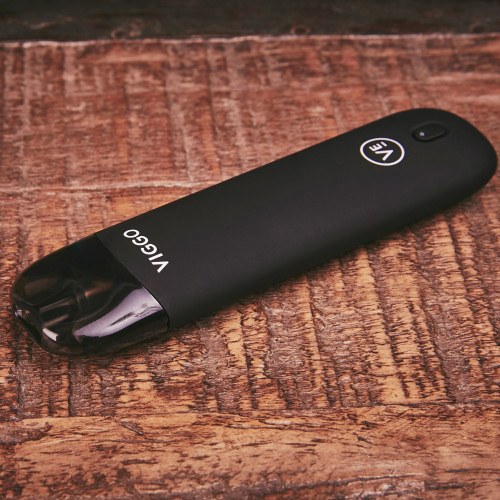
You’re standing in the checkout line, and the person in front of you is digging through a bag, pulling out a bright, neon-colored stick that looks more like a toy than a device. It’s a scene you see every single day now. The way people consume nicotine has shifted from a slow, ritualistic habit to something that feels much more like grabbing a candy bar on your way out the door.
The variety of options can make your head spin. You walk into a shop and you aren’t just choosing a brand; you’re choosing a lifestyle, a flavor profile, and a maintenance level all at once. There is a device for every mood, every budget, and every level of commitment you might have.
Some people love the simplicity of a single-use device. Others can’t imagine life without a sophisticated setup they can customize to their exact liking. It is a massive spectrum of technology and chemistry.
The Disposable Trap and the Illusion of Simplicity
The rise of disposables has changed the rhythm of how people use these things. They are designed for convenience, which is a seductive thing to promise anyone with a busy life. You buy one, you use it until the battery dies or the juice runs out, and then you toss it. There is no cleaning, no refilling, and no tinkering with coils.
It feels easy because it *is* easy. You don’t have to worry about leaking or burnt tastes because the device is essentially a little factory in your hand. But that ease comes with a trade-off in cost and waste. If you find yourself buying a new plastic shell every two days, you might as well be throwing money into a bin.
The volume of these items is staggering. Because they are meant to be thrown away, the build quality is often secondary to the packaging. They are built to look flashy and feel lightweight. They are the fast food of the vaping world.
- Disposable Bar Style: These are the most common. High nicotine, high flavor, zero maintenance.
- Closed Pod Systems: You replace a small cartridge rather than the whole device. It is a middle ground.
- Refillable Disposables: A confusing hybrid that tries to give you the best of both worlds.
You have to ask yourself if the convenience is worth the repetitive cost. Some people swear by them because they hate the mess of liquids, but the math rarely works out in the long run. It is a cycle of consumption that is hard to break once you get used to the “no-brain” aspect of it.
The Learning Curve of Pod Systems
If you move away from disposables, you enter the realm of pod systems. This is where things start to get a bit more serious. These devices are usually much smaller and more discreet than the big, bulky tanks people used to carry. They use a “pod” which is a little plastic chamber containing a coil and a bit of liquid.
When the pod runs out, you don’t throw the whole device away. You just swap the pod. It feels much more sustainable, and it’s generally much cheaper over a few months. However, there is a learning curve. You have to understand the difference between various types of e-liquid and how they interact with your hardware.
If you choose the wrong liquid for a small pod, you might find yourself dealing with a leaking mess in your pocket. It is a common frustration (one that I have dealt with personally). You have to learn the art of the “prime,” which means letting the liquid soak into the cotton before you take that first puff.
Using a Nokt level of precision in your setup can make a huge difference in how a device feels. You aren’t just sucking on a battery; you are managing a tiny, delicate piece of engineering. It requires a bit more respect than a disposable.
| Feature | Disposable | Pod System |
| Upfront Cost | Low | Moderate |
| Ongoing Cost | High | Low |
| Customization | None | High |
| Maintenance | Zero | Occasional |
The Chemistry of the Liquid
Liquid is where the real complexity lives. You can’t just buy a bottle and expect it to work in every device. You have to understand the balance between VG and PG. This is the backbone of every bottle you see on the shelf.
VG, or Vegetable Glycerin, is what gives you that thick, heavy cloud. If you like a big, dramatic vapor, you want high VG. PG, or Propylene Glycol, is what carries the flavor and provides the “throat hit.” It’s the sensation that mimics a traditional cigarette. If your liquid is too thin, it will leak; if it’s too thick, your coil might struggle to pull it.
Then there is the nicotine. It’s not just “nicotine” anymore. You have freebase nicotine, which is often used in high-strength liquids for sub-ohm vaping. Then you have nicotine salts, which are much smoother. Salts allow you to take much higher concentrations without feeling like you are inhaling sandpaper.
This is where people often get tripped up. They buy a high-strength salt liquid for a big, powerful device and end up feeling quite unwell. The chemistry has to match the hardware. You can’t just wing it.
It is a science.
The flavors are another beast entirely. We have moved far beyond basic tobacco. Now, you have dessert flavors, fruit mixes, and even things that taste like breakfast cereal. It can be overwhelming. You might think you want “Blueberry Ice,” only to find out that it is far too sweet for your actual preference.
Building Your Own Rig and the High-End World
For the enthusiasts, there is the world of rebuildables and high-power mods. This is the deep end of the pool. You aren’t buying a pre-made pod or a plastic stick. You are buying coils, tanks, and perhaps even building your own coils out of wire and cotton.
This is for people who want total control. You can decide exactly how much resistance the coil has, how much juice it holds, and how much heat is applied. It is a hobby as much as it is a habit. You spend your time cleaning, rewiring, and tweaking.
It is not for everyone. It is messy, it takes time, and it can be expensive to get it right. But when you find that perfect setting, it is a level of satisfaction that a disposable can never provide. You aren’t just using a product; you are operating a machine.
There is a certain pride in it. You know your device inside and out. You know exactly why it tastes the way it does and exactly why it might be leaking at a certain moment. It turns a mindless habit into a conscious choice.
Most people won’t ever go this far. They will stick to their pods or their disposables. And that is fine. The market has expanded so much that there is a place for every type of user. Whether you want the “set it and forget it” ease of a disposable or the precision of a high-end mod, the technology is there.
Just don’t expect everything to be perfect every time. You will have bad coils, you will have leaky pods, and you will eventually run out of your favorite flavor right when you need it most. It is part of the game.
FAQ
What is the main difference between disposable vapes and pods?
Disposable vapes are all-in-one devices intended to be thrown away after use, whereas pods are reusable devices where only the nicotine cartridge or pod is replaced.
What are e-liquid pods and how do they work?
Pods are small, replaceable tanks or cartridges that contain e-liquid and are inserted into a reusable battery-powered device.
Can I use any liquid in a disposable vape?
No, disposable vapes come pre-filled with specific liquids and cannot be refilled without damaging the device.
What is the difference between e-liquid and e-juice?
There is no functional difference; both terms refer to the liquid solution containing nicotine, flavorings, and vegetable glycerin used in vaping.
How do I know when to replace my pods?
You should replace pods when the flavor weakens, the taste becomes burnt, or the device begins to leak.
Leave a Reply